Without Blood Ending Twist Explained: What Angelina Jolie’s War Drama Really Means
Why Angelina Jolie’s Baricco adaptation refuses to give you catharsis — and why that’s the whole point
I’ve been waiting on Without Blood since the Toronto premiere buzz first started leaking out, and I’ll admit I went in braced for something closer to a war movie than what actually showed up on screen. What I got instead was two hours of two people drinking tea in a café, and somehow it wrecked me more than any battle sequence could have. If you’ve just walked out of a screening (or finished it at home) turning the last twenty minutes over in your head, you’re not alone — the ending is deliberately built to sit with you uncomfortably rather than resolve cleanly.
This is Jolie adapting Alessandro Baricco’s slim, parable-like novel, and she keeps the source material’s refusal to hand out easy verdicts. There’s no shootout, no big reveal monologue, no villain getting his comeuppance in a way that lets the audience exhale. Instead there’s Salma Hayek as Nina and Demian Bichir as Tito, two people bound together by a single afternoon of violence that happened decades before the film even starts.
The Day Everything Broke
Everything in this movie traces back to one scene: armed men riding up to a farmhouse to execute a doctor accused of war crimes. His son is killed alongside him. His young daughter, Nina, hides beneath the floorboards and watches through the cracks — including the detail that stuck with me most, blood from her brother’s body dripping down onto her bare foot as she stays frozen and silent.
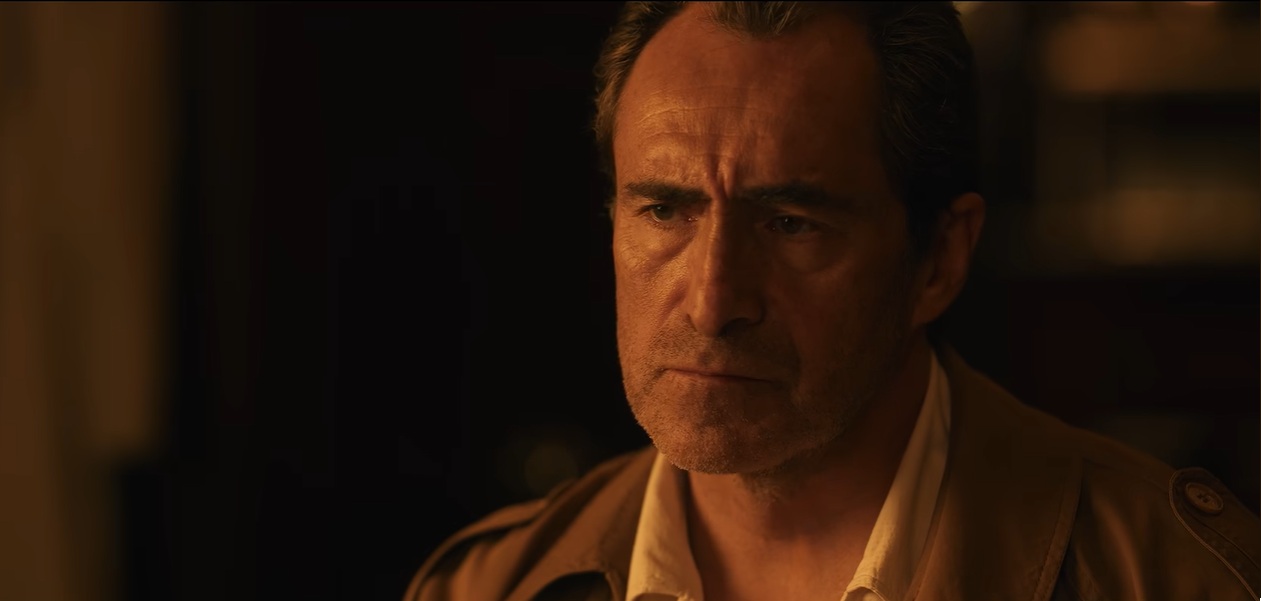
One of the gunmen, a teenager named Tito, finds her hiding spot. He looks at her. He doesn’t say a word to the others. He just closes the trapdoor and walks away, letting her live. That’s the entire hinge the film swings on — a single act of mercy inside an act of atrocity, and neither character ever gets to fully separate one from the other again.
Two Old Strangers, One Unfinished Story
Cut to decades later. Nina, now older, tracks Tito down — he’s living a small, forgettable life running a newsstand. Their reunion plays almost like flirtation at first, which is honestly one of the more unsettling choices in the film, before both of them drop the act and admit they know exactly who the other person is.
What follows is basically a stage play disguised as a movie: a long conversation in an art nouveau café where they trade competing versions of what happened to Nina after the massacre. This is where Jolie gets genuinely clever, because the two accounts don’t match:
| Nina’s Version | Tito’s Version |
|---|---|
| Adopted by a predatory chemist, later gambled away, married off to a warlord at fourteen | The warlord actually loved her and protected her from the men still hunting witnesses |
| Betrayed by her own sons, declared insane to lose her inheritance | Doesn’t contradict this outright, but frames her survival as something closer to fate than cruelty |
Neither version gets confirmed as “true.” That’s not sloppy writing — it’s the entire thesis of the film. Trauma doesn’t preserve memory accurately; it reshapes it into whatever story lets a person keep functioning. Both Nina and Tito have spent fifty years editing the same event into something they can live with.
So What Actually Happens at the End?
Here’s the part everyone’s arguing about online. After all that conversation, all that tension where you’re braced for Nina to finally pull a gun on the last man who destroyed her family — she doesn’t. She invites him to a hotel room instead.
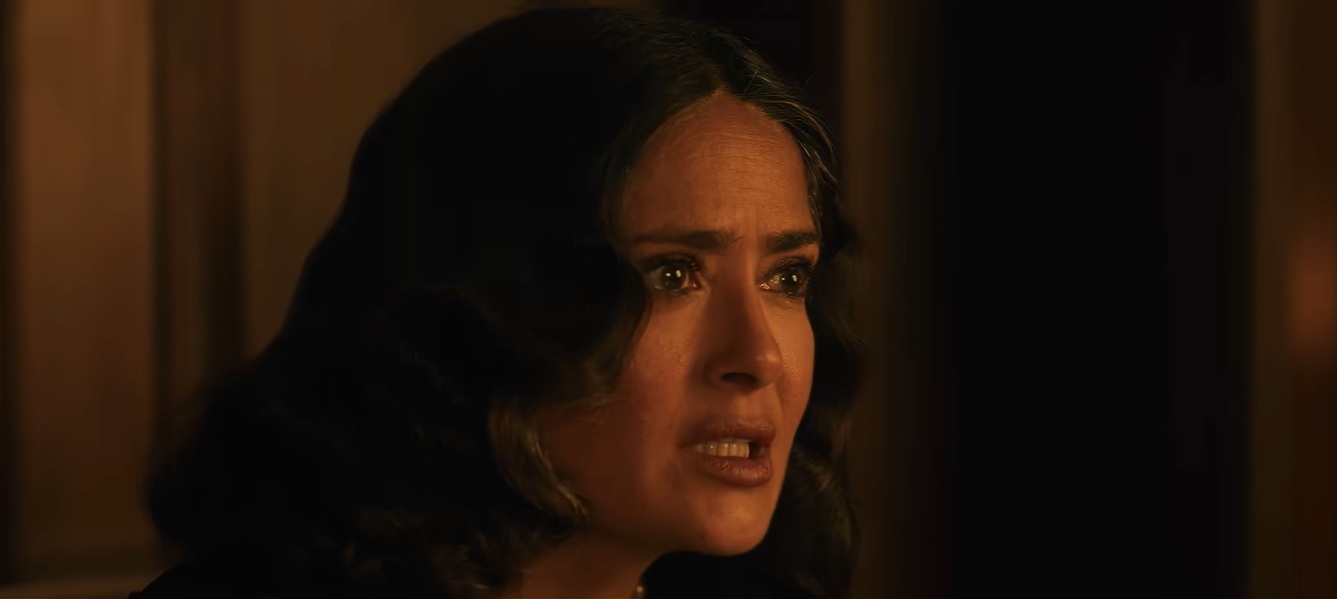
It plays like a swerve into intimacy, and it is one, but the twist isn’t really about sex at all. It’s about what happens physically once they’re alone: Tito, without meaning to, curls his body into the exact same crouched, frozen posture Nina held as a child hiding under the floorboards. The camera pulls back just enough for you to catch it. That’s the whole movie in one image.
The hunter finally becomes the hunted — not through violence, but through mirrored vulnerability.
Nina spends the entire film as the one exposed, the one who had to hide and stay silent to survive. In that hotel room, the positions flip. Tito becomes the one who is small, trapped, and powerless, while Nina is the one watching, in control, deciding what happens next. It’s the closest thing the film has to a revenge scene, and it never raises its voice once.
Why the Ambiguity Actually Works
I’ve seen people online frustrated that the film doesn’t tell you whether Nina forgives him or destroys him. Personally, I think that’s the smartest choice Jolie makes. A few ways I’ve seen fellow viewers read it:
- The “return to the break” reading — Nina isn’t seeking death, she’s seeking a reset of the exact moment her life fractured, and she gets it by forcing Tito into her old position instead.
- The hunter-becomes-hunted reading — real power after a war doesn’t belong to whoever kills last, it belongs to whoever controls the memory of what happened. Nina wins by making Tito live inside her version of history.
- The bleaker reading — this isn’t tenderness at all, it’s a calculated weapon. Hayek’s performance is cold enough throughout that some viewers read the whole hotel scene as Nina engineering Tito’s psychological ruin on purpose.
I lean somewhere between the first two, honestly. There’s a strange tenderness in the final scene that reads less like punishment and more like two ruined people recognizing that the war never let go of either of them — regardless of who was holding the gun.
Without Blood 2026 Ending Explained: The Deeper Meaning of Nina and Tito’s Final Choice
The Takeaway
What makes Without Blood stick with you isn’t a plot twist in the traditional sense. It’s a structural one — the film spends its whole runtime setting up a revenge story and then quietly replaces the gun with a memory. Jolie isn’t interested in giving Tito a punishment that ends. She’s interested in giving him one that never does, because now he has to carry Nina’s childhood terror inside his own body for whatever life he has left.
That’s the version of “justice” this film is actually offering, and it’s a lot more haunting than a bullet would have been.