
Why US Gas Prices Are Rising: Oil Surges 4% After Tanker Attacks (2026 Analysis)
There is something almost unsettling about watching the price of gasoline climb because of events unfolding thousands of miles away. A family filling up an SUV in Ohio, a delivery driver in Texas, and a commuter navigating Los Angeles traffic may have little in common beyond their dependence on fuel. Yet all three can find themselves paying more because commercial tankers have come under attack along strategically important shipping routes in the Middle East.
The latest reported surge in crude oil prices, exceeding 4% during a single trading session, is a reminder of a reality I have watched shape international politics and global markets for years: energy prices rarely move in isolation from the struggle for geopolitical power.
When shipping lanes become dangerous, markets react long before the full economic consequences become clear. Traders anticipate shortages, insurers reassess their exposure, refiners reconsider procurement costs, and fuel distributors prepare for more expensive deliveries. By the time consumers notice the difference at the pump, the underlying chain of reactions may already be well underway.
But there is an important distinction between a temporary market scare and a genuine supply crisis. Understanding that difference is essential to explaining why US gas prices are rising, how much further they could climb, and whether American motorists should expect relief anytime soon.
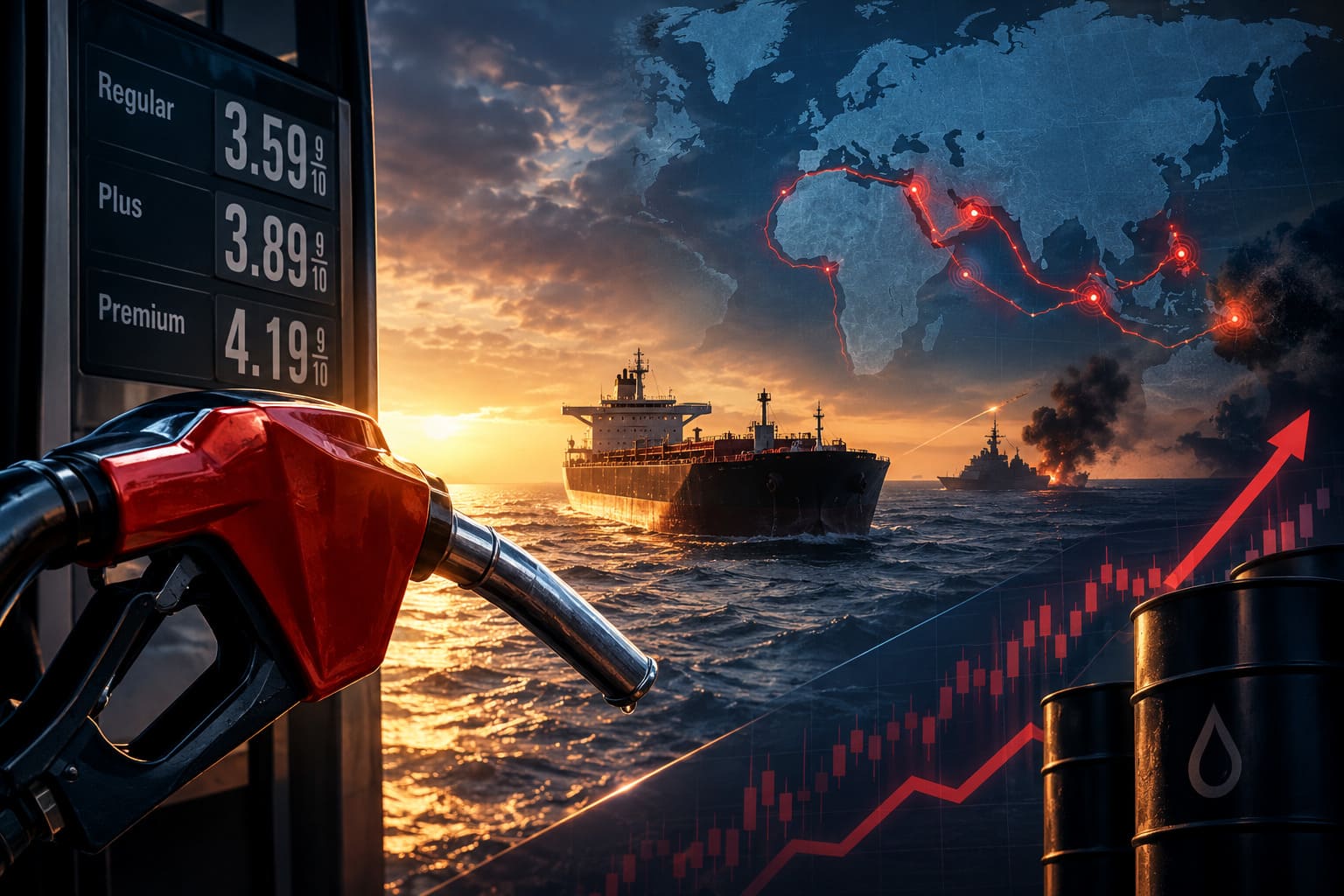
Tanker Attacks Have Changed the Market’s Risk Calculation
Oil traders are accustomed to geopolitical tension. Conflicts, sanctions, diplomatic breakdowns, and military deployments have influenced energy markets for decades. What makes attacks on commercial tankers particularly significant is that they threaten the infrastructure responsible for moving oil, rather than simply the political relationships surrounding its production.
The distinction matters.
A producing country can continue pumping millions of barrels of crude while its exports become more difficult, expensive, or dangerous to deliver. If shipping companies begin avoiding vulnerable waterways, vessels may need to take longer routes. Insurance premiums can rise sharply, and some operators may decide that particular journeys are no longer commercially viable.
Every additional complication introduces uncertainty into a market that depends on predictable flows of enormous quantities of energy.
This is where the geopolitical risk premium enters the picture. Traders are not pricing oil solely according to the number of barrels available today. They are also assessing the probability that tomorrow’s supply will be disrupted.
The reported 4% jump in crude prices reflects that distinction. Even without a confirmed, lasting loss of major production volumes, the possibility of disruption can be enough to push prices higher.
In my view, this is one of the most misunderstood aspects of energy geopolitics. Markets do not wait for a crisis to become undeniable before assigning it an economic cost. They begin charging for the possibility that one is coming.
TWEEPS: Gas is up.
Diesel is at record highs.
Groceries, utilities, healthcare keep climbing.trump’s war and his tariffs did this, and Republicans in Congress refuse to stop him.
And now they’re DESPERATE.
THEY made the affordability crisis.
#RepublicanAffordabilityCrisis https://t.co/UzVmYHCKjE— BrooklynDad_Defiant!☮️ (@mmpadellan) October 12, 2026
How Higher Oil Prices Reach American Gas Stations
Crude oil remains the principal raw material used to manufacture gasoline, making changes in oil prices particularly important for American motorists.
According to the US Energy Information Administration, crude oil commonly represents approximately half or more of the retail price of a gallon of gasoline, although the precise share changes with market conditions.
The rest of the price reflects refining, distribution, marketing, and taxes.
When crude oil becomes more expensive, refiners face higher input costs. Wholesale gasoline prices can respond quickly, and distributors must decide how much they are willing to pay to replenish their supplies. Retail stations then adjust their prices according to replacement costs, local competition, and the amount of fuel already in their storage tanks.
This process can create a frustrating experience for consumers: the price on the sign rises before the next tank of fuel has necessarily become more expensive for the station itself.
The reason is straightforward. A station owner must consider what it will cost to replace the gasoline being sold today, not simply what was paid for the existing inventory.
However, the relationship is not perfectly mechanical. A 4% increase in crude oil does not automatically translate into a 4% increase in gasoline prices. Refining margins, seasonal fuel specifications, inventories, taxes, and regional supply conditions all influence the final result.
What Determines the Price of a Gallon?
| Price Component | How It Affects Motorists |
|---|---|
| Crude Oil | Changes in the cost of the primary gasoline feedstock influence the overall price. |
| Refining | Processing costs, maintenance, and refinery disruptions affect wholesale gasoline availability. |
| Distribution | Pipeline capacity, trucking, storage, and shipping determine how efficiently fuel reaches stations. |
| Taxes | Federal, state, and local taxes create differences between regional pump prices. |
| Retail Competition | Local demand, operating expenses, and replacement costs influence station pricing. |
One pattern frequently discussed by consumer advocates is known as the “rockets and feathers” effect. Gasoline prices often rise rapidly when wholesale costs increase, while declines can take longer to reach consumers.
The effect is not identical everywhere, and local market conditions matter. Nevertheless, it helps explain why drivers may feel the consequences of an oil rally almost immediately but wait longer for meaningful relief.
America’s Domestic Oil Strength Does Not Guarantee Cheap Gasoline
The United States has become one of the world’s largest oil producers, largely because of advances in shale extraction. It is tempting to assume that this production strength should insulate American consumers from instability overseas.
Unfortunately, that assumption overlooks how the international oil market actually works.
Crude oil is traded in a global marketplace. Prices respond to worldwide expectations about supply and demand, not exclusively to the amount produced within US borders.
American producers can sell into that market, refiners compete for suitable crude grades, and international developments influence the economics of domestic fuel production. A geopolitical shock affecting overseas exports can therefore increase the value of oil available to American buyers.
There is also a logistical complication: producing crude oil is not the same as producing gasoline. Refineries must process crude into usable fuels, and those facilities have physical limitations, maintenance requirements, and regional distribution constraints.
In other words, a country can produce substantial quantities of oil and still experience expensive gasoline when the global market tightens or domestic fuel infrastructure encounters difficulties.
Energy independence is not the same thing as energy isolation. That distinction is central to understanding the vulnerability of American fuel prices in a period of international instability.
Refinery Bottlenecks Can Make the Problem Worse
The tanker attacks may provide the immediate geopolitical catalyst, but the extent of the price increase depends heavily on conditions inside the United States.
Fuel markets are not evenly connected. Some regions can obtain supplies from several refining centers, while others depend on narrower transportation networks or imported fuel.
The US Energy Information Administration divides the country into Petroleum Administration for Defense Districts, commonly known as PADDs. These regions help analysts understand differences in petroleum production, refining, transportation, and consumption.
The West Coast is a particularly useful example. Its geography, refinery configuration, and transportation constraints can make it more difficult to replace disrupted supplies quickly. Regional markets can therefore experience price movements that differ substantially from the national average.
Several factors deserve attention:
- Refinery Maintenance: Planned shutdowns can temporarily reduce the amount of gasoline available, especially when multiple facilities experience disruptions at the same time.
- Regional Isolation: Limited pipeline connections or transportation bottlenecks can prevent surplus fuel elsewhere from reaching an affected market quickly.
- Shipping Costs: Higher insurance premiums and freight rates can increase the cost of moving refined products between international suppliers and US ports.
- Seasonal Requirements: Changes in gasoline specifications can influence refining costs and the availability of suitable fuel blends.
These complications explain why two American drivers can experience the same international oil shock very differently.
A motorist near major Gulf Coast refining infrastructure may encounter a modest increase, while someone in a more isolated market could face a considerably sharper jump.
Market Psychology Can Amplify the Initial Shock
In energy markets, perception is not a substitute for physical supply. But it can influence prices well before a shortage becomes visible.
Following alarming geopolitical headlines, traders reassess their positions, commercial buyers review their hedging strategies, and companies dependent on fuel begin preparing for higher costs.
Airlines, trucking operators, agricultural businesses, and other large fuel consumers have strong incentives to protect themselves against unfavorable price movements. Some use futures contracts or other financial instruments to manage that exposure.
Such activity is not inherently speculative or irresponsible. It is a normal part of commercial risk management. Nevertheless, widespread concern about future shortages can contribute to rapid price adjustments across financial and physical markets.
Social media adds another dimension. Dramatic claims about an impending energy crisis can circulate much faster than detailed assessments of actual production losses, shipping delays, or inventory levels.
That does not mean online discussion is responsible for every price increase. A genuine threat to oil transportation would matter regardless of what people post on financial forums. But sensational commentary can distort public expectations and encourage motorists to buy fuel earlier than necessary.
The result may be temporary local pressure on service stations, especially if consumers react simultaneously to fears of shortages.
My concern is less about individual motorists filling their tanks and more about the political environment that emerges when energy prices rise. Fuel is an unusually visible measure of economic anxiety. People encounter its cost repeatedly, and they often associate it directly with the competence of political leaders.
A relatively modest increase at the pump can therefore become a much larger issue in public debate.
What Happens Next? Three Scenarios for US Gas Prices
Predicting the next move in gasoline prices requires more than extrapolating the latest crude oil rally. The decisive question is whether the security situation produces lasting disruptions to physical supply.
Three broad scenarios illustrate the possibilities.
Scenario 1: Shipping Security Improves
If commercial vessels can resume normal operations and the immediate threat diminishes, the geopolitical risk premium could begin to unwind.
Crude oil prices might stabilize or retreat, although retail gasoline would not necessarily decline at the same speed. Wholesale inventory costs, regional conditions, and station replacement prices would still influence how quickly consumers see relief.
Scenario 2: Disruptions Continue
If attacks persist, shipping companies avoid vulnerable routes, or insurance costs remain elevated, the market could sustain a higher risk premium.
Under these conditions, gasoline prices would face continued upward pressure. The size of the increase would depend on the volume of oil and refined products affected, available inventories, alternative transportation routes, and the response of producers.
Scenario 3: The Conflict Spreads to Energy Infrastructure
The most serious possibility would involve sustained disruption to major export facilities, production assets, or strategically important maritime corridors.
Such an escalation could transform a short-lived market reaction into a more substantial supply shock. Oil prices would then be responding not merely to uncertainty but to the prospect of fewer barrels reaching the market.
The following table summarizes the implications.
| Scenario | Likely Market Direction | What Drivers Should Watch |
|---|---|---|
| Shipping Security Restored | Potential stabilization or decline | Falling crude prices and easing freight costs |
| Disruptions Persist | Continued upward pressure | Insurance premiums, shipping delays, and inventories |
| Major Supply Infrastructure Affected | Risk of a sharper rally | Export interruptions and sustained production losses |
It is important to treat specific price targets cautiously. A forecast that US gasoline could rise another 20 to 30 cents per gallon may be plausible under certain conditions, but it should not be presented as a certainty without supporting market data and a clear time horizon.
The national average also conceals substantial differences between states and metropolitan areas. California, Washington, and other relatively expensive markets can respond differently from states closer to major refining centers, depending on taxes, fuel specifications, and local supply conditions.
Why Was Jimmy Kimmel Live Suspended? ABC Late-Night Show Controversy Explained
The Indicators That Matter More Than the Headlines
For drivers trying to understand where prices are heading, several indicators offer a more useful picture than dramatic predictions circulating online.
First, watch the direction of benchmark crude prices, including West Texas Intermediate and Brent. A sustained increase matters more than a brief intraday jump.
Second, pay attention to wholesale gasoline prices. These provide a closer link to what stations are likely to pay for replacement fuel.
Third, monitor US gasoline inventories and refinery utilization. Falling inventories combined with operational disruptions can make a market more vulnerable to additional shocks.
Finally, follow developments in maritime security and the actual movement of commercial vessels. Statements about geopolitical tension matter, but confirmed disruptions to shipping and exports provide stronger evidence of a physical supply problem.
For reliable context, the US Energy Information Administration’s petroleum reports and weekly fuel-price data are useful starting points. They help distinguish measurable changes in supply and prices from speculation about what might happen next.
Gasoline Prices Are a Geopolitical Warning Signal
The latest reported 4% increase in crude oil prices following tanker attacks illustrates how quickly international instability can reach American households. The process begins with a threat to transportation, spreads through expectations and wholesale markets, and eventually affects the price motorists pay at the pump.
Yet the deeper lesson is not simply that geopolitical tension makes gasoline more expensive. It is that the modern energy system remains interconnected in ways that domestic production alone cannot eliminate.
The United States may produce enormous quantities of oil, but American consumers still operate within a global marketplace shaped by shipping security, refining capacity, international trade, and the decisions of governments far beyond Washington.
In the short term, the direction of gasoline prices will depend on whether the reported maritime threats develop into sustained supply disruptions. If shipping conditions improve, some of the initial market premium may disappear. If the situation deteriorates, consumers could face a more prolonged period of elevated fuel costs.
After years of following global political developments, I would resist both extremes: assuming that every oil rally signals an approaching crisis and dismissing every geopolitical shock as temporary market noise.
The more useful approach is to examine what has actually changed, which risks remain unresolved, and how those developments affect physical energy flows.
The price displayed at an American gas station is more than a fuel bill. It is also a reflection of global security, economic interdependence, and the cost of uncertainty.

