Primetime Movie 2026 Ending Explained: Reddit Spoilers and the True Story Twist
I’ve been waiting for this movie since the first blurry set photos leaked online, and honestly? Nothing about Primetime prepared me for how it actually lands. Lance Oppenheim’s narrative feature debut isn’t the true-crime nostalgia trip a lot of us expected walking in — it’s something colder, meaner, and a lot harder to shake off once the credits roll.
If you’ve already seen it, or you’ve been scrolling through spoiler threads trying to piece together what happened in that final act, you already know the ending doesn’t hand you closure. It takes it away from you. Let’s break down what actually goes down in Primetime, why Robert Pattinson’s performance is the engine driving the whole thing, and how the film’s climax ties back to a real, documented tragedy that most casual viewers have never heard of.
The Paradise (2026) Movie US Release Date, Cast, Plot, and How to Watch Nani’s Darkest Action Drama
The Setup: A Ratings Machine Disguised as Justice
Primetime drops us into 2006, right in the golden age of hidden-camera predator stings dominating basic cable. Pattinson plays a TV host clearly cut from the same cloth as real-world investigative figures like Chris Hansen — but Oppenheim isn’t interested in hero worship. He’s interested in the machinery behind the hero.
What makes Pattinson’s performance so unsettling is that duality he nails from scene one: a man who genuinely, sincerely believes he’s performing a public service, while simultaneously being glued to the ratings ticker like it’s an IV drip. You watch him convince himself he’s a crusader in one breath and obsess over sweeps week in the next, and the film never lets you settle on which version of him is real. Spoiler: neither is. They’re the same guy.
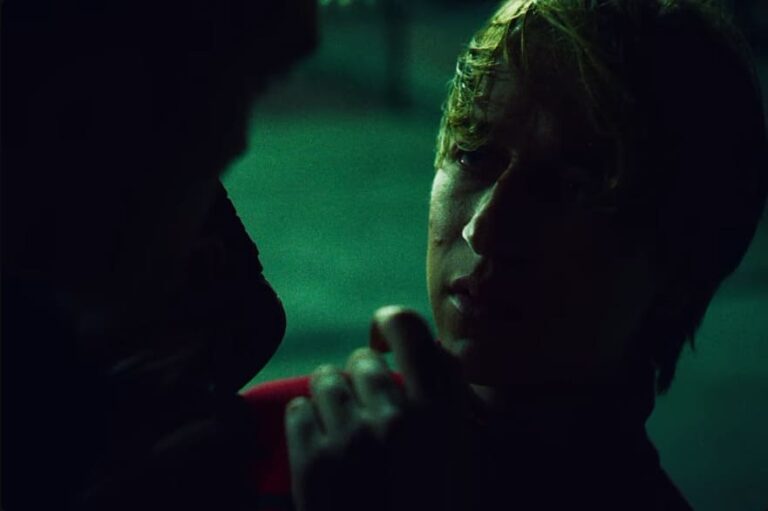
Around him, the crew isn’t framed as a noble task force either — they’re a burnt-out, adrenaline-dependent unit that has to keep escalating the theatrics just to keep sponsors happy. Oppenheim shoots this world with overexposed lighting, invasive grainy camera work, and a score that hums with low-grade dread the entire runtime. Nothing about the visual language lets you relax. It’s all buildup toward a break that you can feel coming from the first act, even if you don’t know exactly what shape it’ll take.

The Turning Point: Murphy, Texas
Here’s where the film pivots hard. The team’s usual formula — lure the target to a controlled bait house — stops working when their next subject is a respected assistant district attorney who won’t take the bait. Instead of backing off, the crew doubles down: they coordinate with local police and a tactical unit to bring the cameras straight to the man’s private residence.
This is the structural hinge of Primetime, and it’s genuinely one of the more disorienting sequences I’ve watched in a film this year. The claustrophobic, controlled tension of the earlier stings dissolves into something closer to a warzone — floodlights sweeping a suburban lawn, sirens, a live broadcast of what looks less like justice and more like an invasion.
And then the pacing does something brutal: it stutters. Goes quiet. And from behind a locked door, a single muffled gunshot ends it.
Primetime Ending Explained: No Villain, No Victory
This is the part audiences are still arguing about online. Primetime refuses to give you the traditional beat where the ‘monster’ gets frog-marched out in handcuffs while the crowd cheers. There’s no confession, no triumphant courtroom wrap-up, no clean moral. The assistant DA takes his own life the moment the tactical team breaches the door — and the film just sits in the wreckage of that.
What follows is arguably the smartest stretch of the movie:
- The host freezes — literally stunned mid-broadcast, watching the red tally lights on cameras that are now capturing a tragedy instead of a confession.
- The network folds fast — sponsors pull out, the show gets axed almost overnight.
- The identity collapse — a man whose entire sense of self was built on audience numbers is left with nothing once the audience disappears.
It’s not a redemption arc. It’s not even really a punishment arc. It’s just… entropy. The spectacle ate itself, and everyone left standing has to live in the silence after the cameras stop rolling. That emptiness is the point — Oppenheim isn’t interested in giving you catharsis, he’s interested in making you sit with how manufactured the whole concept of ‘justice as entertainment’ really was.
What Reddit Is Actually Arguing About
The r/movies and r/A24 threads have been a genuine mess in the best way, and a few debates keep resurfacing:
| Debate Topic | The Take |
|---|---|
| The R rating | Traced largely to a raw, unfiltered scene where a suspect wanders into the bait house naked — early viewers call it grotesque but accurate to the era’s chaos. |
| The abrupt cut-to-black | Some mainstream viewers wanted a traditional epilogue; others (myself included) think the sudden ending mirrors how the real show got yanked off air. |
| Real-world involvement | Reports suggest that the television personality who inspired the lead role declined to endorse the project after reading the script. |
That last point is the one that sticks with me. There’s a meta layer to Primetime about who gets to own a public narrative once it’s been turned into content — and the film seems very aware that it’s doing exactly what it’s criticizing.

The True Story Behind the Fiction
Here’s the part a lot of casual viewers miss: this isn’t loosely ‘inspired by’ true events. It’s rooted specifically in the 2007 Murphy, Texas sting operation, documented in Luke Dittrich’s now-infamous Esquire feature. That real-world piece detailed how the collision of live TV production and police tactics created conditions that were, frankly, dangerous — compromising both the legal process and the safety of the people involved.
The fallout from that actual case included lawsuits, family grief, and a lasting shift in how networks approached this entire genre of programming. By grounding the film in that documented history rather than treating it as pure genre fiction, Oppenheim elevates Primetime from a ‘gotcha’ celebrity thriller into something closer to an indictment — of the format, the audience, and honestly, all of us who used to watch this stuff unfold like it was harmless.
My Honest Take
Primetime isn’t a comfortable watch, and it’s not trying to be. What it does instead is force you to sit with the uncomfortable math of public shaming as entertainment — how quickly righteousness curdles into spectacle when there’s a ratings number attached to it. Pattinson gives one of his most controlled, unnerving performances in years, and Oppenheim proves he can translate his documentary instincts into narrative filmmaking without losing any of the discomfort that made his earlier work stick with people.
If you walked out of the theater feeling unsettled rather than satisfied, that’s not a flaw in the film. That’s exactly the reaction it was built to get out of you.